Tankkala Timilsena, Kathmandu.
Russia is often recognized as one of the world's most influential nations. Its vast territory, remarkable scientific achievements, strong educational institutions, and rich cultural heritage have made it a global power. However, beyond its political influence lies another Russia-a country of breathtaking landscapes, historic cities, diverse cultures, and extraordinary hospitality. Travelling across Russia offers a unique opportunity to witness how history, nature, science, and tradition come together in one of the largest countries on Earth.
My journey across Russia revealed a nation that is impossible to understand through headlines alone. Stretching across eleven time zones, Russia presents an incredible diversity of geography, architecture, languages, and lifestyles. Every region has its own identity, yet together they form a nation deeply rooted in history while continuously embracing innovation.
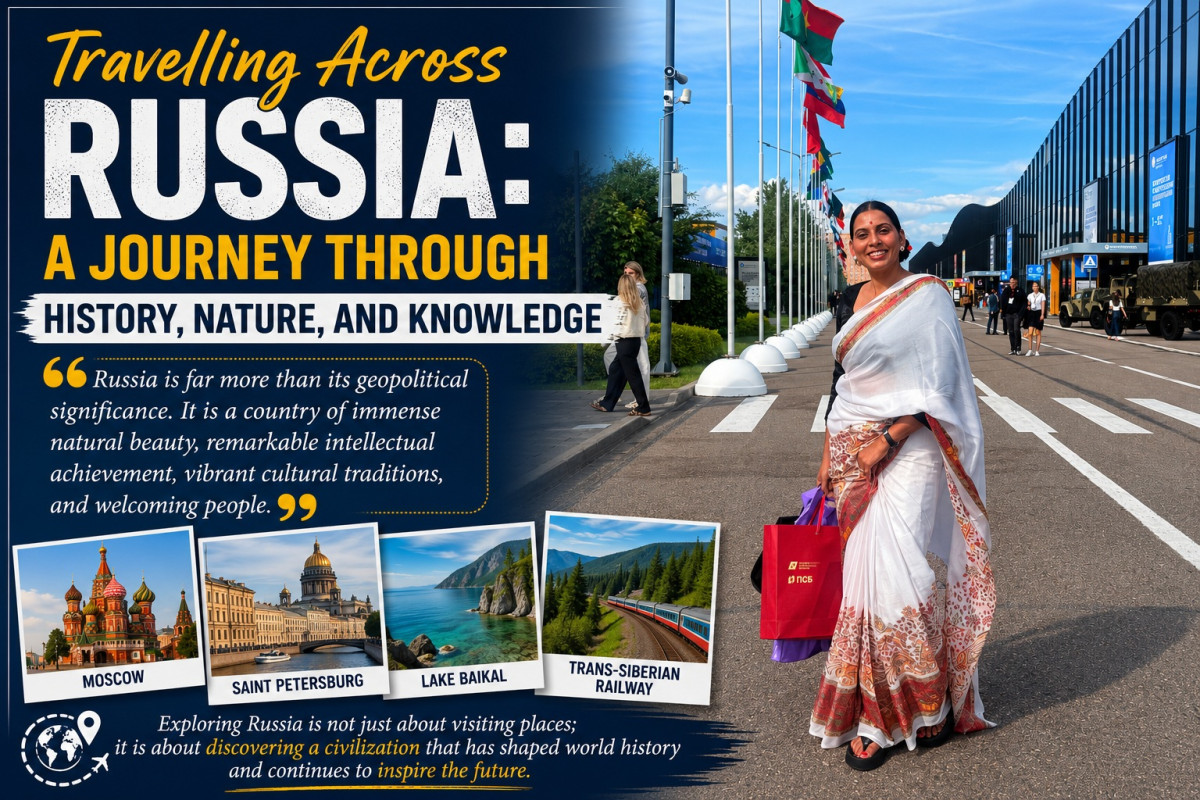
The journey naturally begins in Moscow, the vibrant capital city. Walking through Red Square, surrounded by the colorful domes of Saint Basil's Cathedral and the historic Kremlin, one immediately senses the country's rich historical legacy. Moscow is not only Russia's political center but also a hub of education, science, business, and culture. Its museums, universities, theaters, and modern transport system reflect a nation that values both tradition and progress.
From Moscow, travelling to Saint Petersburg offers an entirely different experience. Often called Russia's cultural capital, the city impresses visitors with its magnificent palaces, elegant canals, world-famous museums, and classical architecture. The Hermitage Museum, one of the largest museums in the world, preserves centuries of artistic and cultural achievements. During the White Nights of summer, the city becomes even more enchanting as daylight lingers late into the evening.
One of the most fascinating experiences in Russia is travelling on the Trans-Siberian Railway. Covering thousands of kilometers from western Russia to the Pacific coast, the railway connects forests, rivers, mountains, and countless towns and villages. Every stop introduces travelers to different traditions, cuisines, and lifestyles, demonstrating the immense diversity of the Russian Federation. The journey itself becomes an education in geography, history, and human resilience.
Russia's natural beauty is equally captivating. Lake Baikal, the world's deepest freshwater lake, offers crystal-clear waters and spectacular scenery throughout the year. The snow-covered mountains of the Caucasus, the volcanic landscapes of Kamchatka, the endless Siberian forests, and the Arctic wilderness illustrate the country's remarkable ecological diversity. Each destination provides unforgettable experiences for nature lovers, photographers, and adventure seekers.
Throughout my travels, I was particularly impressed by Russia's commitment to education and scientific research. Universities function not merely as educational institutions but as centers of innovation, research, and technological advancement. Russian institutions have earned international recognition in medicine, engineering, aerospace technology, nuclear science, artificial intelligence, cybersecurity, agriculture, and fundamental sciences.
For decades, students from Nepal have benefited from educational opportunities in Russia. Many Nepali doctors, engineers, scientists, and agricultural experts received their education at Russian universities and later contributed significantly to Nepal's national development. The legacy of this academic cooperation continues to strengthen the friendship between the two countries.
Russian hospitality is another memorable aspect of travelling across the country. Whether meeting university professors, students, local families, or fellow travelers, I encountered warmth, generosity, and genuine curiosity about Nepal. Despite differences in language and culture, people were always willing to help visitors understand their traditions and daily life.
Russian cuisine also reflects the country's diversity. Traditional dishes such as borscht, pelmeni, blini, and various regional specialties offer travelers an authentic taste of local culture. Markets and cafés provide opportunities to experience both traditional recipes and modern culinary creativity.
Travelling across Russia also highlights the country's technological development. Modern metro systems, high-speed trains, digital public services, and advanced research centers demonstrate Russia's continued investment in science, engineering, and innovation. These achievements coexist alongside centuries-old churches, monasteries, and historic monuments, creating a fascinating contrast between heritage and modernity.
Beyond tourism, travelling through Russia provides valuable insights into international education, scientific collaboration, and economic opportunities. As Nepal and Russia approach seven decades of diplomatic relations, people-to-people exchanges through tourism, education, culture, and research can further strengthen mutual understanding. Increased travel encourages not only cultural appreciation but also academic partnerships, business cooperation, and long-term friendship between the two nations.
Russia is far more than its geopolitical significance. It is a country of immense natural beauty, remarkable intellectual achievement, vibrant cultural traditions, and welcoming people. Travelling across Russia is not simply about visiting famous landmarks—it is about discovering a civilization that has shaped world history while continuing to contribute to global education, science, and innovation.
For travelers from Nepal and around the world, Russia offers an unforgettable journey across continents, cultures, and centuries. Every city, every landscape, and every conversation leaves a lasting impression, reminding visitors that the true spirit of Russia is best understood not through maps or politics, but by experiencing the country firsthand.
 भाद्र २८, २०८३ / 2026-09-13